
How to Plan a Corporate Event: A Step-by-Step Production Guide for Baltimore Organizations
Author: Conder Inc Production Team | Last Updated: June 2026
To plan a corporate event production, work through eight steps in order: define the objective, set a budget with a contingency, lock the date and venue, build the run of show, plan the technical production (staging, audio, lighting, video), book your crew, manage vendors and logistics, then rehearse and execute with one point of contact on site. Most Baltimore corporate events need 8 to 12 weeks of lead time, and large galas or product launches need 4 to 6 months. The earlier you bring in a production partner, the fewer surprises you face on event day.
Quick Decision Guide
| If your event is... | Best approach |
|---|---|
| A small internal meeting, basic audio, no stage | In-house venue AV is usually enough |
| A program with a stage, presenters, and an audience | Hire a production team for staging, audio, lighting, and video |
| A gala, awards show, or product launch with custom build | Full-service production company from the start |
| Run by a team with no dedicated events staff | Full-service, single point of contact, so you run the event instead of chasing vendors |
Rule of thumb: if the room has to look right, sound right, and run on a tight schedule, the production is worth handing to a team that does it full time.
Key Takeaways
- Objective first: Every production decision traces back to one defined goal, so set it before anything else.
- Protect a contingency: Budget in categories and hold back 10 to 15 percent for the moving parts of a live event.
- The run of show is the backbone: A minute-by-minute timeline keeps crew, vendors, and presenters on the same schedule.
- Plan production as one system: Match staging, audio, lighting, and video to the venue together, not as four separate vendors.
- Rehearse to find problems early: A full rehearsal catches the issues your audience would otherwise see live.
- Start early: Give a standard event 8 to 12 weeks, and a large gala or product launch 4 to 6 months.
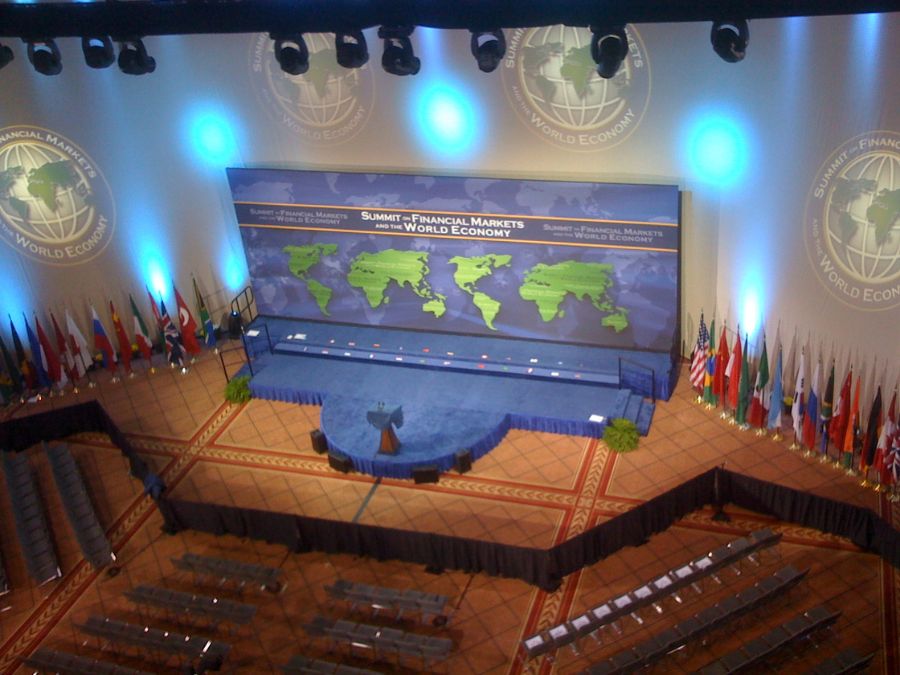
How to Plan a Corporate Event Production: Step-by-Step Guide
Step 1: Define the objective before anything else
Every production decision traces back to one question: what is this event supposed to do? A client appreciation dinner, an awards gala, a product launch, and an internal town hall all look different on the floor because they are built for different outcomes.
Write down the single most important result. Then list the secondary goals. This becomes the filter for every later choice, from how the stage is positioned to how long the program runs. When the objective is clear, the technical plan almost designs itself.
Step 2: Set a real budget and protect a contingency
Build your budget in categories: venue, production (staging, audio, lighting, video), labor, catering, talent or speakers, rentals, and a contingency line of 10 to 15 percent. The contingency is not optional. Live events have moving parts, and the contingency is what keeps a last-minute change from becoming a problem.
If your budget is fixed, say so early. A good production partner can scale the design to the number you have rather than quoting you a build you cannot use.
Step 3: Lock the date, then the venue
Confirm the date first, because it drives availability for everything else. Then evaluate venues against your production needs, not just the photos. Look at:
- Ceiling height and rigging points (this determines what you can fly for lighting and video)
- Load-in access, dock space, and elevator size
- Available power and where it is located
- Room capacity at your actual seating layout, not the theoretical max
- Noise, union, and curfew rules
A venue that looks perfect can still be wrong if it cannot support your staging or load-in window. Walk the space with someone who thinks in load calculations and rigging points, not just floor plans.
Step 4: Build the run of show
The run of show is the minute-by-minute timeline for event day: load-in, sound check, doors, program segments, transitions, and load-out. This document is the backbone of the production. Every crew member, vendor, and presenter works from it.
Be specific about transitions. The gap between a speaker leaving the stage and a video rolling is where events feel rough. A tight run of show closes those gaps before they happen.
Step 5: Plan the technical production
This is where staging, audio, lighting, and video come together. Match each element to the room and the program:
- Staging: Size the stage to the venue and the audience sightlines. Confirm the truss and ground support can carry the lighting and video loads safely.
- Audio: Cover the room evenly. Plan microphones for every presenter, plus backups.
- Lighting: Light the stage for the cameras and the audience. Set looks for each program segment.
- Video: Confirm screen sizes, content formats, and playback well before event day. Test every file.
With a full-service team, this is handled as one connected plan rather than four separate vendors who have never spoken to each other.
Step 6: Book the crew
Production runs on people. You need experienced stagehands, riggers, audio and lighting techs, and a stage manager who keeps the run of show on time. Certified, reliable crew is the difference between a clean load-in and a stressful one.
Book labor against the run of show so you have the right number of hands for load-in, show, and load-out. Underbooking crew to save money usually costs more in overtime and delays.
Step 7: Manage vendors and logistics
Coordinate catering, rentals, signage, transportation, and any outside talent against the same timeline. Confirm delivery and pickup windows so the dock is not gridlocked at load-in. Share the run of show with every vendor so everyone works from one source of truth.
This is the step where a single point of contact pays off. When one team owns the production schedule, vendors are not getting conflicting instructions from five directions.
Step 8: Rehearse, then execute
Run a full rehearsal: sound check, lighting looks, video playback, and a walk-through of the program with presenters. Rehearsal is where you catch the problems that would otherwise show up in front of your audience.
On event day, your production partner runs the floor while you focus on your guests. A stage manager calls the show, the crew executes the run of show, and changes are handled without the room ever noticing.
Examples
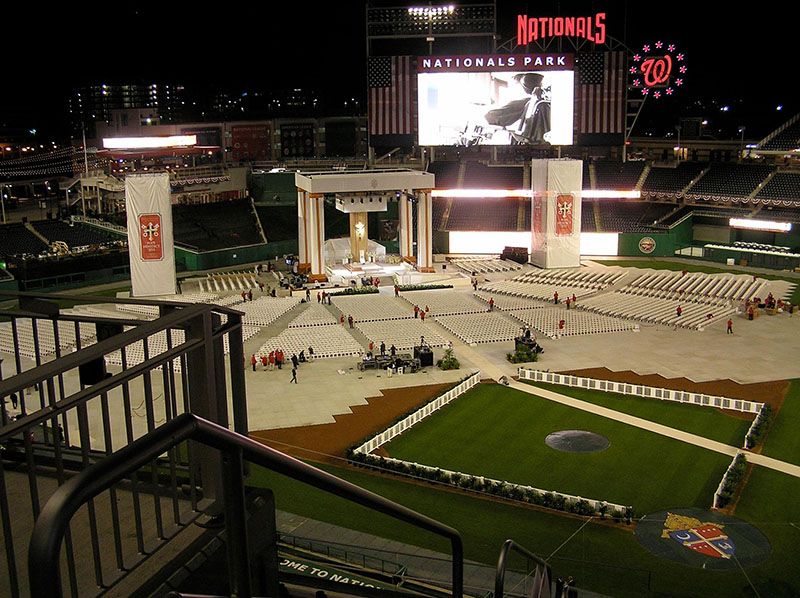
- Corporate awards gala (400 guests): Custom stage with branded scenic, line-array audio for clear speech across a ballroom, theatrical lighting looks tied to each award segment, and IMAG video so guests in back can see the stage. Lead time: 4 months. The win or lose moment is transition timing between award segments.
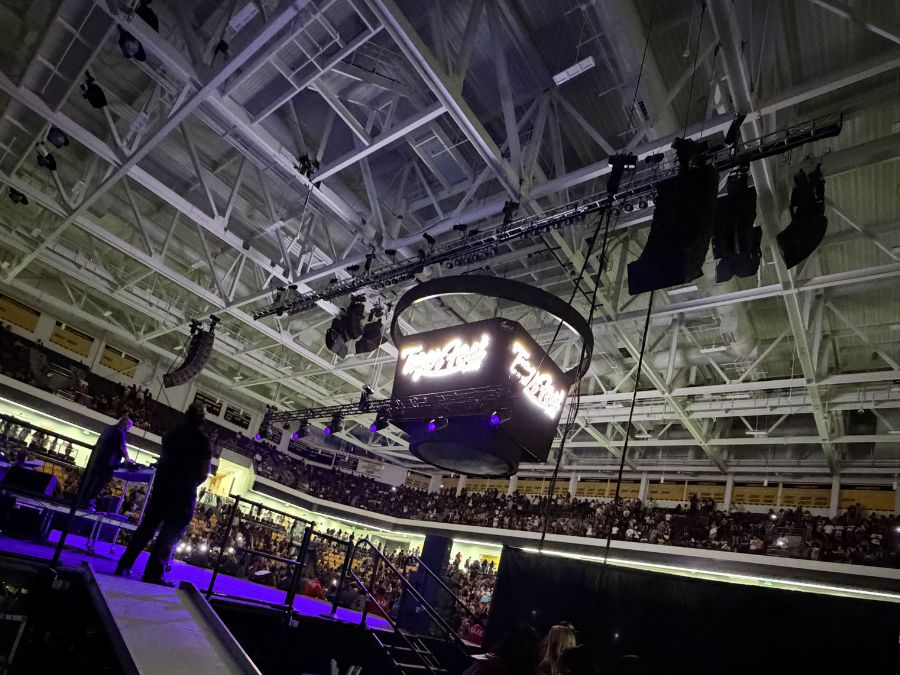
- Product launch (200 guests, press in the room): A clean stage with a large LED video wall for the reveal, tested playback for the launch video, and lighting that shifts on the reveal cue. Lead time: 3 to 4 months. The reveal has to hit on time, so the run of show and rehearsal carry the event.
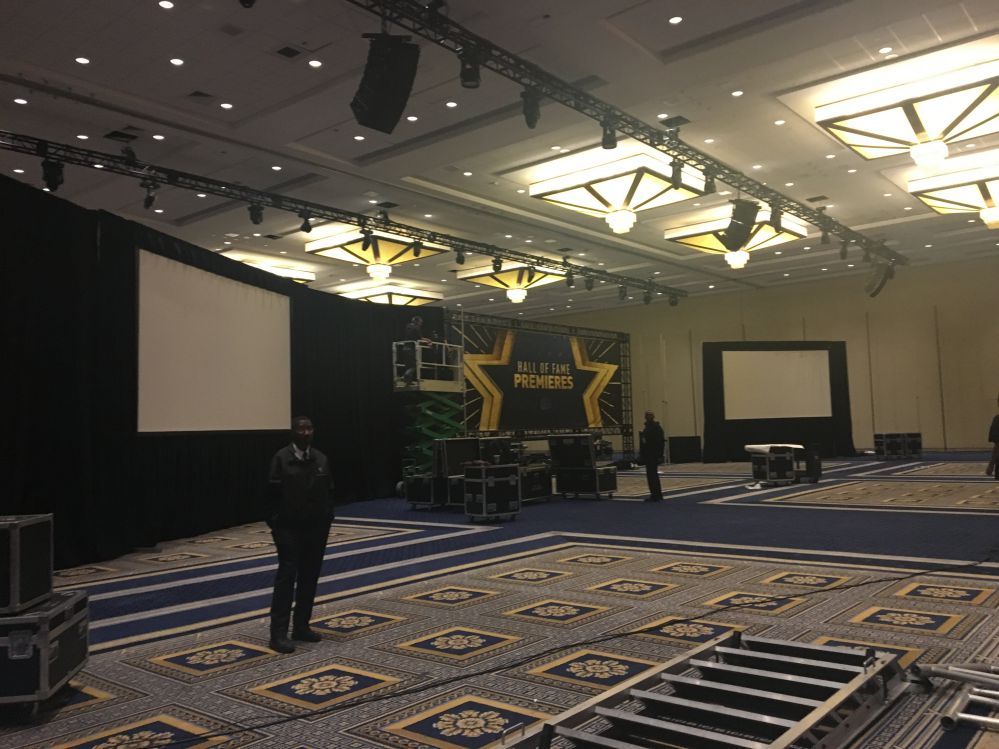
- Internal town hall (150 employees): Modest stage, even audio coverage, simple lighting, and slides on screen. Lead time: 6 to 8 weeks. The goal is clear sound and a program that runs on schedule.
- Annual fundraiser (300 guests): Stage for a program and live appeal, reliable audio for speakers and a paddle raise, warm lighting, and screens for the impact video. Lead time: 3 months. Sound clarity during the appeal directly affects the result.
When This Does Not Apply
A small internal meeting with a handful of people and a single presenter usually does not need a full production. In-house venue AV covers it. The eight-step process is built for events with a stage, a program, an audience, and a result that depends on the room working.
Conder Inc is a full-service event production company serving Baltimore and the East Coast. Galas, brand activations, fundraisers, product launches, and custom builds. One call. One team. Everything covered. Tell us your date, your venue, and what the event needs to accomplish, and we will build the production plan around it.
Frequently Asked Questions
How far in advance should you start planning a corporate event?
Start 8 to 12 weeks out for a standard corporate event in Baltimore. For a large gala, awards show, or product launch with custom staging and video, give yourself 4 to 6 months. The extra time protects venue availability, vendor booking, and the rehearsal window.
How much does corporate event production cost in Baltimore?
It depends on the scale of the production, the venue, and the technical build. A modest internal event with basic audio and a small stage is a different number than a 500-person gala with full staging, video walls, and a multi-camera setup. The most useful first step is a conversation about your objective and budget so the design fits the number you have.
Do we need professional AV, or can the venue handle it?
In-house venue AV works for simple meetings. For anything with a stage, a program, presenters, and an audience that needs to see and hear clearly, a dedicated production team gives you control over the result.
What does a full-service production company handle that we would otherwise manage ourselves?
A full-service team owns the technical production, the crew, the run of show, and on-site execution as one connected plan, instead of you hiring a separate AV vendor, staging supplier, and labor company and coordinating between them.
Can one company really handle staging, crew, and production together?
Yes. Conder Inc covers end-to-end production, with experienced crews through Charm City Crewing and staging and truss through Conder Truss. One call reaches the whole team, and one point of contact owns the plan from concept to load-out.
What is a run of show and why does it matter?
The run of show is the minute-by-minute timeline for event day. It keeps crew, vendors, and presenters working from one schedule, and it closes the rough transitions that make an event feel unpolished.
Need Help?
Conder Inc is a full-service event production company serving Baltimore, the East Coast and beyond.
Galas, brand activations, fundraisers, product launches, and custom builds. One call. One team. Everything covered.
Tell us your date, your venue, and what the event needs to accomplish, and we will build the production plan around it.