
What AV Equipment Does a Corporate Event Need
Author: Conder Inc Production Team | Last Updated: July, 2026
A corporate event needs four systems: audio, video, lighting, and the power and rigging to support them, scaled to the room and the format. A 50-person meeting may need only a screen, a projector, and two microphones. A 500-person awards gala needs line-array audio, one or more large screens or an LED wall, stage lighting on a console, a riser or stage, and distributed power. The right list comes down to three things: how many people are in the room, what has to happen on stage, and what the venue already provides.
Quick Decision Guide
| If your event is... | You typically need... |
|---|---|
| Meeting or conference, 50-150 guests | Projector or LED screen, lectern mic plus 1-2 wireless handhelds, front-of-room speakers, simple wash lighting |
| Awards gala or dinner, 150-500 guests | Line-array or distributed speakers, one or more large screens or an LED wall, stage wash plus a spotlight, a lighting console, a stage or riser |
| Product launch or brand activation | LED video wall, programmed lighting, show playback and control, accent lighting, custom staging |
| General session with breakout rooms | Main-room AV plus a separate audio and video kit for each breakout |
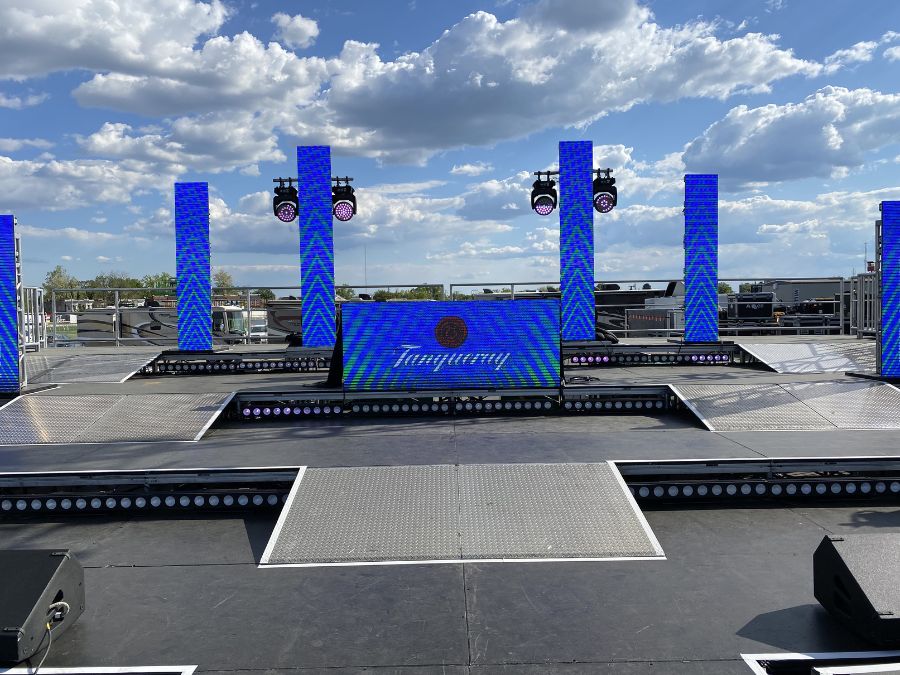
| Outdoor or raw venue | Everything above plus generators and power distribution, weather cover, and ground-supported rigging |
Key Takeaways
- Scale to the room, not to a generic list. Headcount, room size, and what happens on stage decide the equipment more than the type of event on the invitation.
- Power is the piece most people forget. Lighting, video, and audio all draw power at the same time, and many venues cannot carry that load without distribution or a generator.
- One provider for AV, staging, and rigging removes the gaps. When separate vendors handle each piece, the spaces between them tend to surface on show day.
- Book against the production schedule, not the event date. Load-in, focus, and rehearsal happen before guests arrive, so the gear and crew are needed earlier than people expect.
Step-by-Step Guide
The Four Systems Every Corporate Event Runs On
Most corporate AV breaks down into four connected systems.
Audio. Speech intelligibility comes first. A small meeting needs a couple of microphones and a pair of speakers. A panel needs a microphone per speaker, usually lavalier or tabletop, plus a handheld for audience questions. A large ballroom needs a line array or distributed speakers so the back tables hear as clearly as the front, along with a mixing position and someone running it.
Video. This covers what guests see. Options run from a single projector and screen, to multiple screens for a wide room, to an LED wall for a product launch where image quality is part of the message. Content playback, switching between a presenter and slides, and confidence monitors on stage all sit inside the video system.
Lighting. Lighting does two jobs: it makes presenters and the stage visible on camera and to the room, and it sets the tone. A meeting may need only even front light. A gala needs stage wash, a spotlight for awards, and often color to match the brand or the room.
Power and rigging. This is the infrastructure under the other three. Audio, video, and lighting all need clean, sufficient power, which often means distribution beyond the wall outlets. Anything hung overhead, screens, speakers, or lighting, needs proper rigging points rated for the load.
How the Equipment Changes by Event Type
A 100-person conference and a 400-person gala are different builds. The conference leans on clear audio and reliable projection. The gala adds stage lighting, larger or multiple screens, a stage, and a louder, more even audio system.
A product launch shifts weight toward video and programmed lighting because the visual is the point. Breakout sessions multiply the smaller kits across rooms rather than scaling one big system.
What the Venue Decides for You
Before finalizing any list, the venue answers several questions.
Does it have house sound, or does everything come in?
What is the ceiling height and where are the rigging points?
How much power is available, and on how many circuits?
How wide is the room, which affects how many screens and speakers cover it?
Is the load-in dock and freight path big enough for the gear and the schedule? A site visit answers these and usually trims or adds items before a quote is final.
A Simple Way to Build Your AV List
1. Count the room. Final headcount and room dimensions set the size of audio and the number of screens.
2. Map the stage. List everything that happens up front: presenters, panels, awards, performances, video playback. Each adds specific gear.
3. Check the venue. Confirm house AV, power, rigging points, and load-in access.
4. Add power and rigging to match. Size distribution to the combined draw, and confirm rigging is rated for anything overhead.
5. Plan for backup. Spare microphones, a backup projector or playback path, and a few extra channels of power prevent a single failure from stopping the show.
Examples
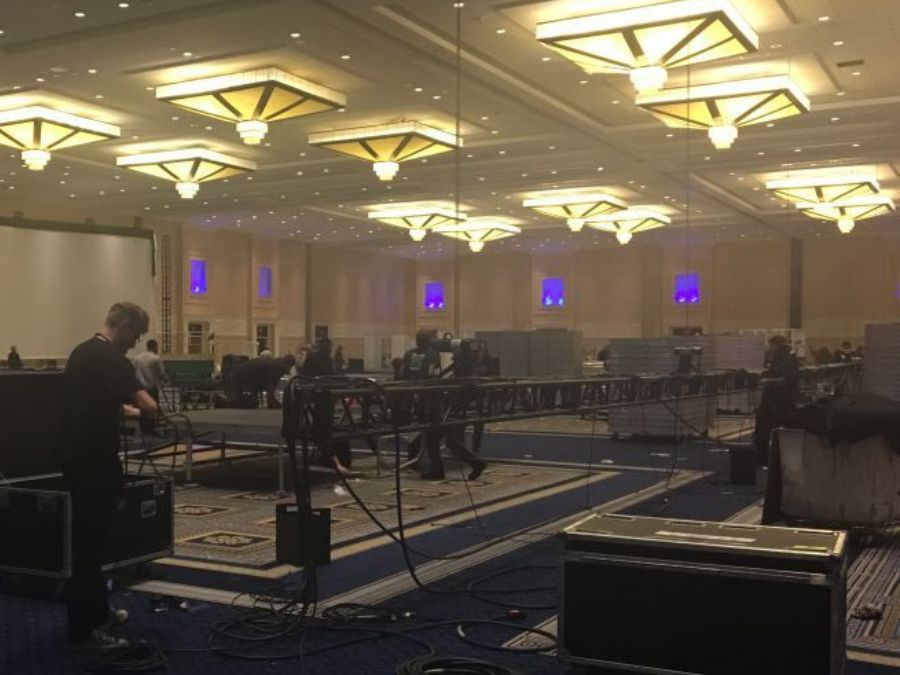
A 120-person conference in a hotel ballroom. Typical build: one or two projectors and screens sized to the room, a lectern microphone plus two wireless handhelds, a pair of speakers with a small mixer, even front lighting, and a laptop-to-screen switch for slides. House power is usually enough.
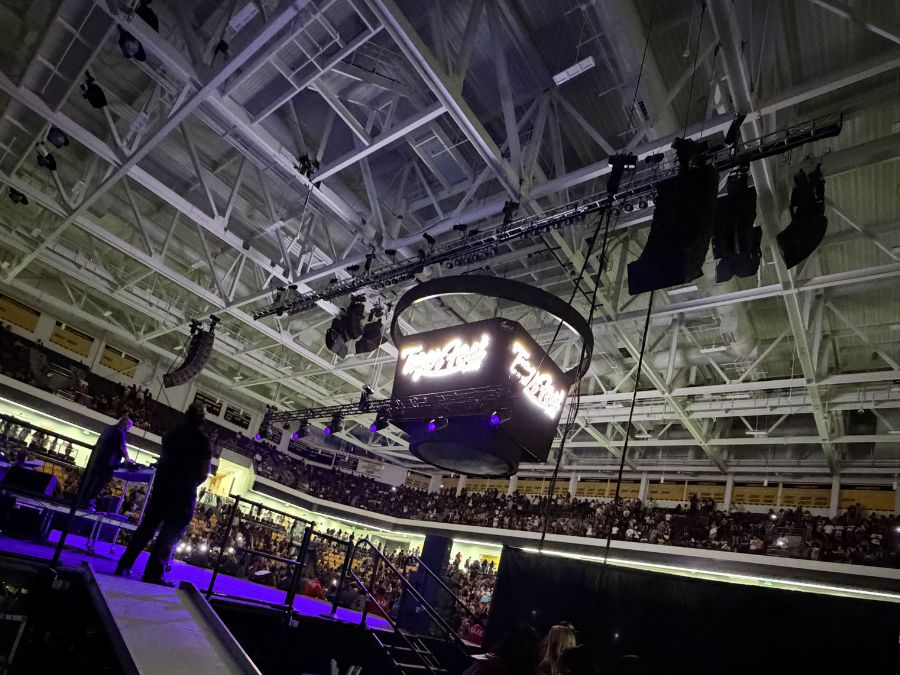
A 300-person awards gala. Typical build: distributed or line-array speakers run from a front-of-house position, two side screens plus a center screen or LED wall, a lit stage with wash and a follow or pin spot for award moments, a lighting console with an operator, a riser, and power distribution to carry lighting and catering at the same time.
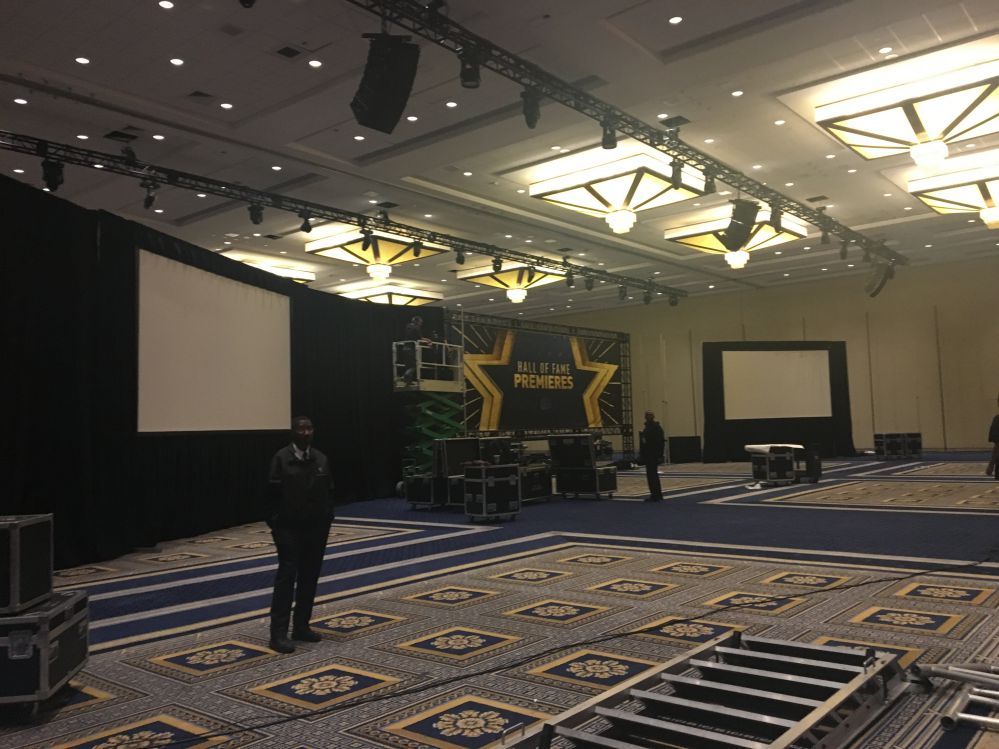
An 80-guest product launch for press and VIPs. Typical build: an LED video wall as the centerpiece, programmed lighting cued to the reveal, show playback and control, accent lighting on the product and the space, and custom staging to frame the moment. Power and rigging are sized around the wall and the lighting rig.
Next Step
1. Share your event date, venue, headcount, and a rough program - what happens on stage and in what order.
2. We review the venue specs and confirm what the house provides versus what needs to come in.
3. You receive a quote covering audio, video, lighting, staging, and power as one package.
4. We build the load-in and crew schedule around your production timeline, not just the event start time.
Frequently Asked Questions
How much AV equipment do I need for a 100-person conference?
Usually a screen and projector or LED panel, a lectern microphone with one or two wireless handhelds, a pair of speakers with a small mixer, and even front lighting. The exact count depends on room width and whether there is a panel or just single presenters.
Do I need a video wall or a projector?
A projector and screen are enough for most meetings and conferences with controlled lighting. An LED wall makes sense when the room has a lot of ambient light, when image quality is central to the event such as a product launch, or when the screen needs to be very large and bright.
How many microphones does a panel discussion need?
Plan one microphone per panelist, either lavalier or tabletop, a microphone for the moderator, and at least one handheld for audience questions.
Who provides power for AV at a corporate event?
Some venues provide enough house power, but larger events usually need power distribution brought in, and outdoor or raw venues often need a generator. This should be confirmed during the site visit, not on event day.
Do I need backup equipment?
Yes for anything that would stop the show if it failed: spare microphones, a backup projector or second playback path, and extra power channels. For a single presenter this is light. For an awards show or launch it matters more.
What is the difference between renting AV and hiring a production company?
Renting gives you the gear. A production company provides the gear plus the design, the crew to run it, staging and rigging, and one point of contact who owns how it all works together on the day.
How far in advance should I book AV for a corporate event?
Book as early as the venue and date are set, especially for galas, launches, and busy seasons. The crew and gear are scheduled against load-in and rehearsal, which fall before the event itself.
Need Help?
Conder Inc is a full-service event production company serving Baltimore, the East Coast and beyond.
Galas, brand activations, fundraisers, product launches, and custom builds. One call. One team. Everything covered.
Tell us your date, your venue, and what the event needs to accomplish, and we will build the production plan around it.