
What Does an Outdoor Event Need That an Indoor One Doesn't?
Author: Conder Inc Production Team | Last Updated: August 2026
An outdoor event has to supply everything a venue normally provides. Indoors, the building gives you a roof, rigging points, power, level floors, and weather protection. Outdoors, all of that becomes part of the build. That means ground support structures instead of ceiling rigging points, generators and distribution instead of house power, weather-rated structures with a documented wind and rain plan, and site work for terrain, access, and cable paths. The equipment on stage may be identical to an indoor show. The infrastructure holding it up, powering it, and protecting it is the difference, and it is usually the larger share of the build.
---
Quick Decision Guide
| If your site has... | You will need to bring... |
|---|---|
| No building or roof structure | Ground support system or roof structure to hang lighting, audio, and video |
| No electrical service, or service too small for the load | Generators, distribution, and cabling sized to the full production draw |
| Uneven ground, grass, gravel, or asphalt | Leveling, ballast or anchoring, decking, and cable protection |
| Public access or street impact | Permits, fencing, barricade, and a site plan before load-in |
| Any exposure to weather | Wind-rated structures, a written weather call process, and rain contingency |
Key Takeaways
- Outdoors, structure replaces the building. With no ceiling grid, everything overhead has to be supported from the ground up.
- Power is a build item, not a utility. Generators and distribution have to be specified against the actual production load, not estimated.
- Weather planning is a documented process. Wind ratings and a defined call procedure are part of the production plan, not a day-of judgment call.
- Ground conditions change the schedule. Terrain, access, and cable runs regularly add more time than the staging itself.
- Load-in windows are longer outdoors. More infrastructure goes in before any production gear can be touched.
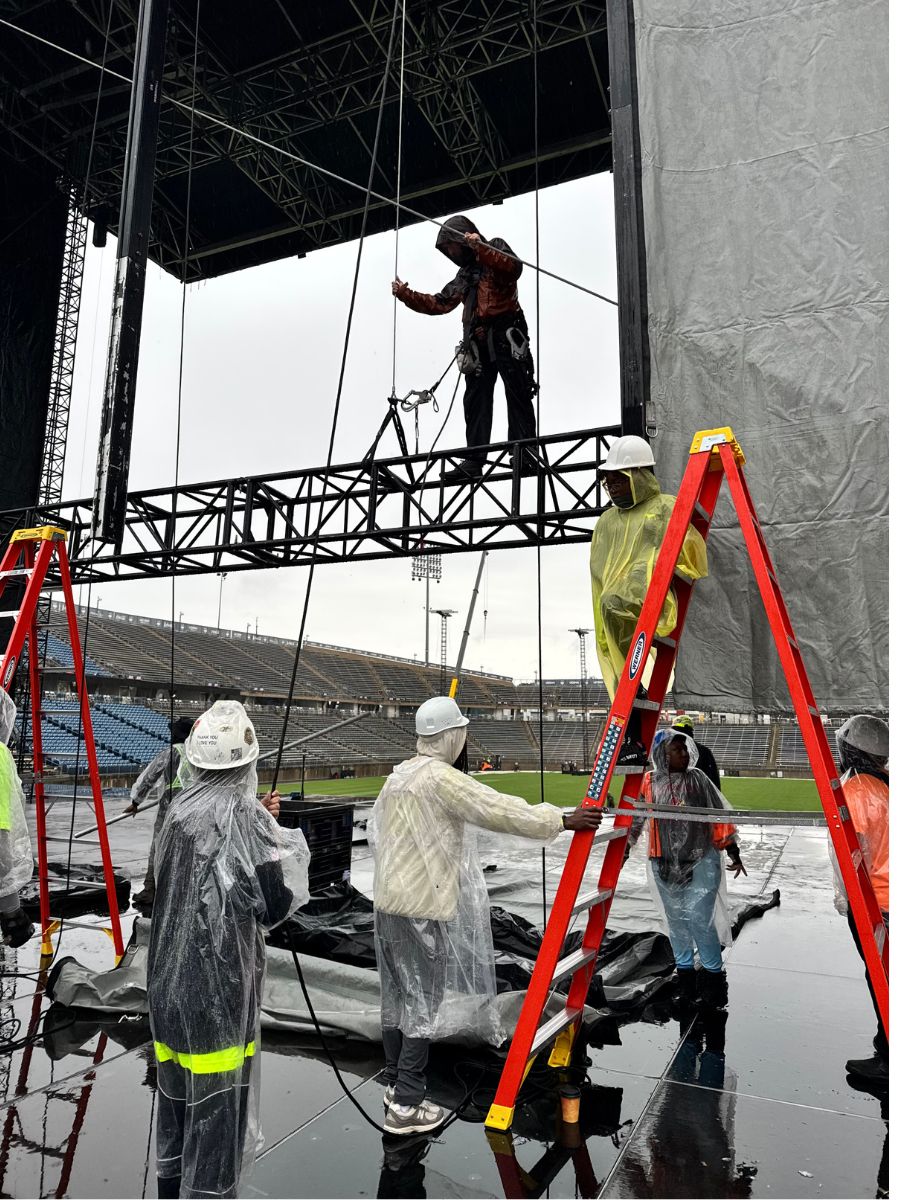
Step-by-Step Guide
Structure: No Ceiling Means Ground Support
Indoors, lighting, audio, and video hang from the building's rigging points. Outdoors there are none, so the structure that holds the show has to be built.
Ground support systems are freestanding truss structures that carry the rig from the ground rather than the ceiling. Roof systems add weather cover for the stage, performers, and equipment. Both are engineered for the specific load being hung and the conditions of the site.
This is where outdoor budgets and schedules diverge most sharply from indoor ones. An indoor rig might take a morning to hang. The same rig outdoors needs its supporting structure built first, and that structure has to be engineered, delivered, assembled, and ballasted or anchored before a single fixture goes up.
Conder Inc supplies ground support and staging structures through Conder Truss, so the structural design and the production build are handled by one group rather than coordinated between separate vendors.
Power: Nothing Is Already There
Indoor venues supply power. Outdoor sites usually supply some, or none, or the wrong kind.
The production draw has to be calculated across audio, lighting, video, and everything supporting them, then matched against what the site actually offers. Where service is missing or insufficient, generators cover the gap, with distribution and cabling sized to the load and routed safely across the site.
Two things go wrong here regularly. Sites get assessed on assumed capacity rather than measured capacity, and generator sizing gets based on a partial equipment list. Both surface on show day, which is the worst time to find them.
Weather: A Plan, Not a Hope
Outdoor structures carry wind ratings, and those ratings come with responsibilities. A production plan should state what the structures are rated for, who monitors conditions, at what threshold the call is made, and what happens when it is.
Rain affects power distribution, cable management, and equipment protection. Wind affects anything with surface area, including banners, scrim, video walls, and roof covers. Heat affects both equipment and crew across a long build.
None of this requires a complicated answer. It requires a decided one, in writing, before load-in.
Ground and Site Logistics
The site itself sets the schedule more than most first-pass plans allow for.
- Terrain: grass, gravel, slope, and soft ground all affect how structures are leveled and secured
- Access: where trucks can get to, how far gear travels from truck to stage, and whether the path holds up under load
- Cable paths: runs across public areas need protection and routing planned in advance
- Egress and public safety: fencing, barricade, and crowd routing are part of the site plan
- Permits: outdoor public events commonly require them, and timelines can affect the build schedule
How an Outdoor Build Comes Together
1. Site assessment first. Before any gear is specified, someone walks the site and confirms ground conditions, truck access, existing power, and where structures can physically go.
2. Structure gets engineered. Ground support or roof systems are designed against the actual load being hung and the conditions of the site, not selected from a catalogue.
3. Power gets calculated. The full production draw is totalled and matched against available service. Whatever is missing determines generator size and distribution.
4. Permits and site plan go in. Fencing, egress, cable paths, and street or public impact are documented. Permitting timelines can gate the whole schedule, so this runs early.
5. Site work and structure go up. Leveling, ballast or anchoring, decking, and the support structure itself. Nothing production-related happens until this is complete.
6. Production installs. Rigging, audio, lighting, and video go in once there is something to hang them from and something to power them with.
7. Weather plan is confirmed. Ratings, monitoring, thresholds, and who makes the call. Agreed before doors, not during.
8. Show, then strike. Strike is a full operation of its own, usually at night, often in worse conditions than load-in.
Examples
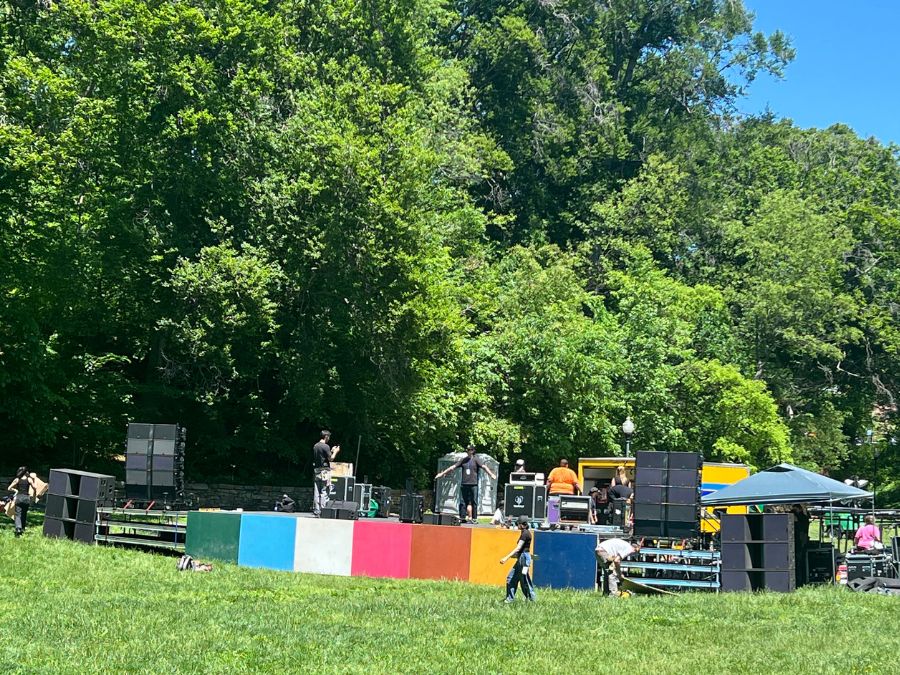
A community concert in a park with no electrical service. Typical build: a low stage deck leveled on grass that slopes, audio ground-stacked either side because there is no structure to fly it from, a pop-up shelter for front-of-house and support positions, power brought in or pulled from whatever limited service is nearby, and a small crew carrying gear across open ground with no dock to unload at. The equipment list is short, and the site still sets the schedule.
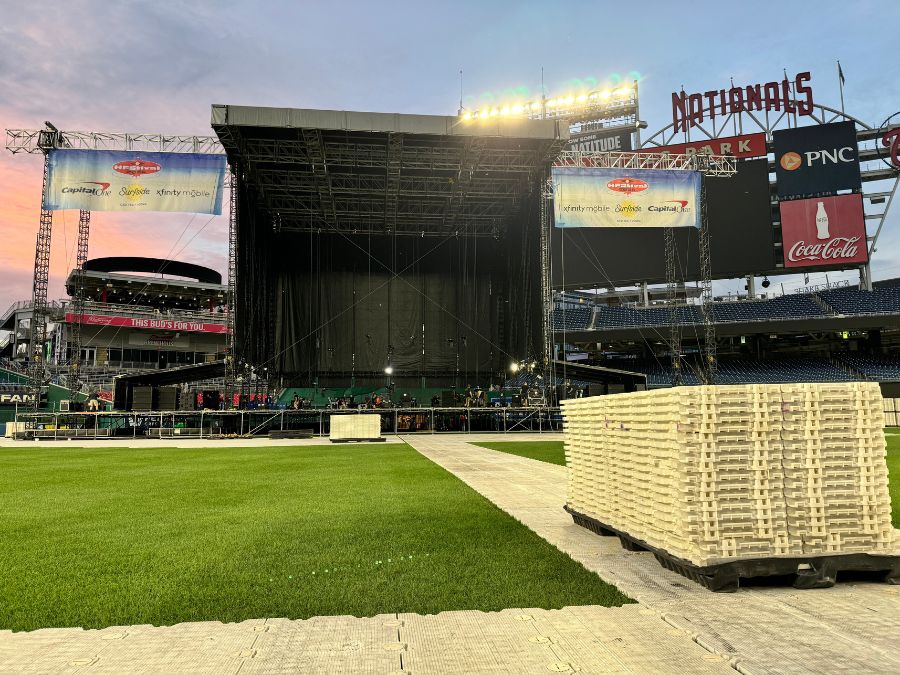
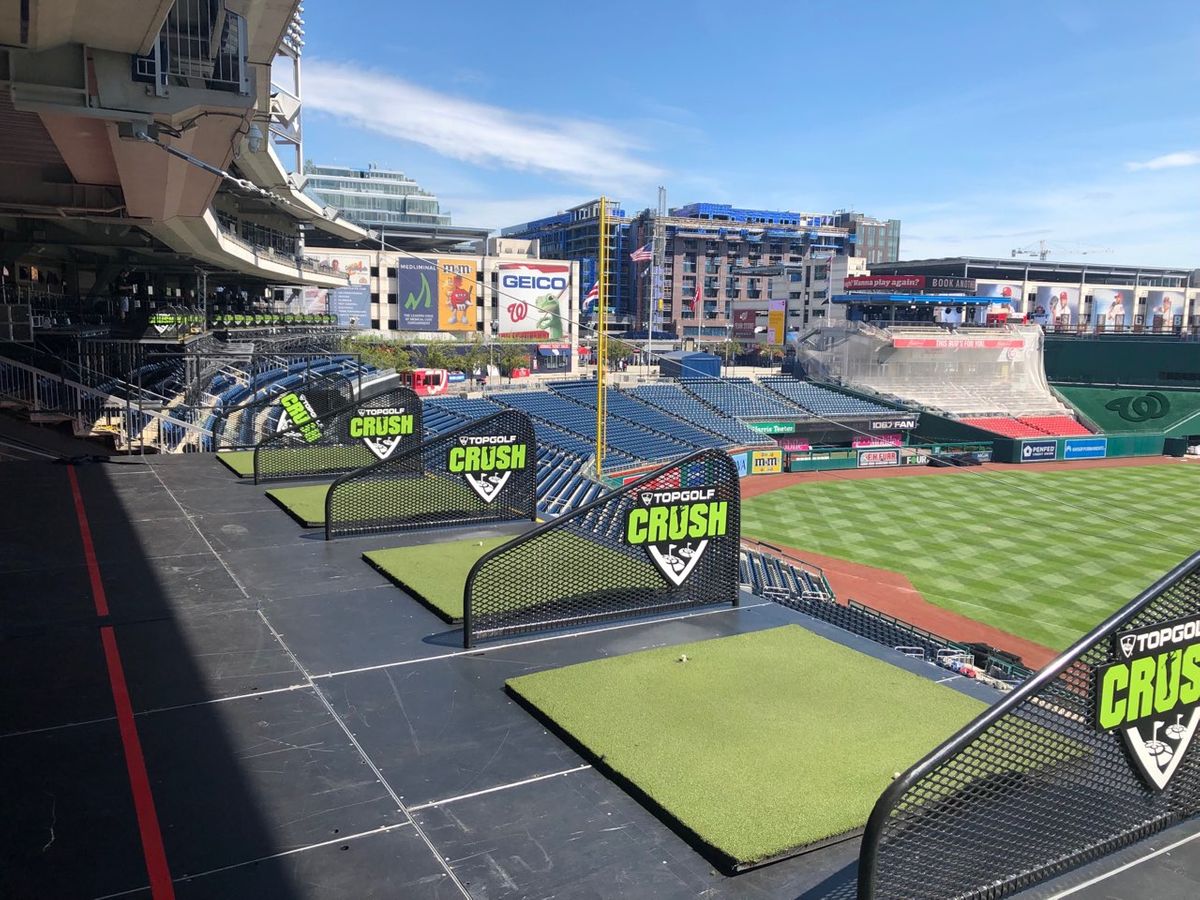
A concert build on a ballpark field. Typical build: interlocking field-protection decking laid over the turf before any load-in traffic crosses it, a ground-supported stage with a full upstage wall, towers carrying banner headers either side, barricade set ahead of the stage, and cable paths routed around the protected surface. Protecting the playing surface is a scheduled part of the build, and panels go down before the first truck moves.
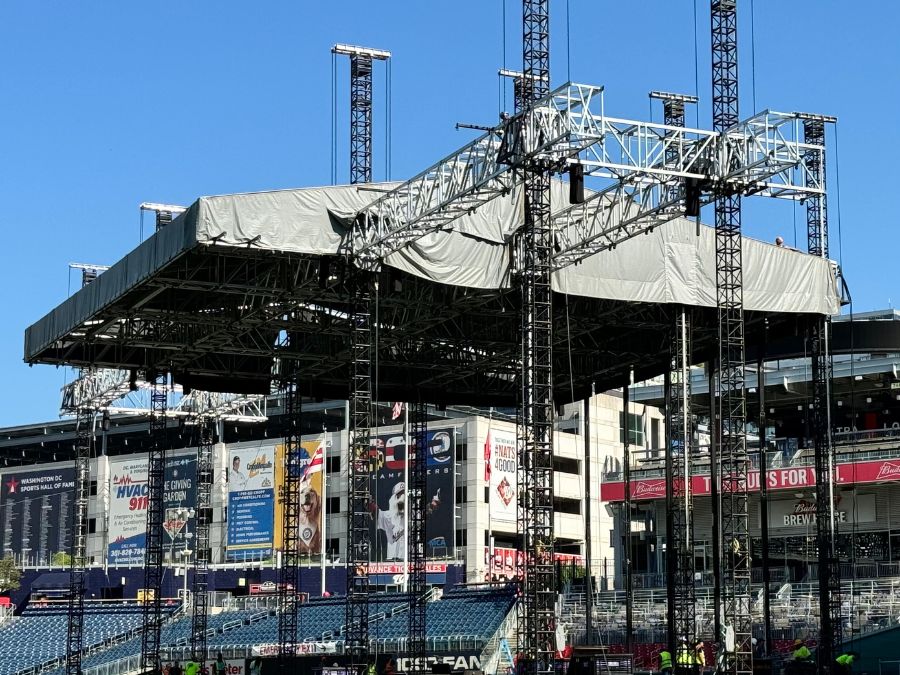
A ground-supported roof going up on a stadium field. Typical build: freestanding towers carrying a covered roof over the stage deck, flanking tower positions for PA and delay hangs, the canopy installed before any lighting or audio is flown, and crew working the deck through install. With no ceiling to hang from, every point overhead is carried by structure that has to be built first.
Next Step
1. Tell us where the site is and what date you are holding. For outdoor work the location drives more of the answer than the program does.
2. We walk the ground. Surface, slope, truck access, and whatever electrical service is actually there, measured rather than assumed.
3. Structure and power get engineered to that site. Ground support or roof sized to the rig and the wind exposure, generators sized to the real load.
4. You get one schedule that starts with site work and ends with strike, and a written weather plan naming the ratings, the thresholds, and who makes the call.
Outdoor production is one build, not a stack of separate vendor relationships. Structure, power, rigging, audio, video, lighting, crew, and site logistics are handled by one team, with structures supplied through Conder Truss and technical crew through Charm City Crewing.
Frequently Asked Questions
What is a ground support system?
A freestanding truss structure that supports lighting, audio, and video from the ground, used where there is no ceiling or rigging points to hang from. It is the standard solution for outdoor stages and for indoor spaces without suitable rigging.
Do I need a generator for an outdoor event?
If the site has no electrical service, or service smaller than the production load, then yes. The calculation is based on the full equipment list rather than an estimate, and distribution and cabling are part of the same plan.
How much longer is load-in for an outdoor event?
Longer than indoors in nearly every case, because structure and power go in before production gear can start. The exact difference depends on site access, terrain, and how much structure the show needs.
What wind speed stops an outdoor event?
It depends on what the structures are rated for, which varies by system and configuration. The number that matters is the rating for your specific build, and it should be stated in the production plan along with who makes the call and when.
Do outdoor events need permits?
Outdoor public events generally require permits, and requirements vary by site, size, and whether structures, power, or street closures are involved. Confirm early, because permitting timelines can affect the build schedule.
Can you put on an outdoor event on grass or uneven ground?
Yes, with the right approach to leveling, ballast or anchoring, and decking. Ground conditions affect method and schedule rather than feasibility.
What happens to an outdoor event if it rains?
That depends on the plan made in advance. Roof systems protect the stage and equipment, cable and distribution are managed for wet conditions, and the production plan should state the thresholds for continuing, pausing, or calling the show.
Is outdoor production more expensive than indoor?
Generally, because infrastructure the venue would otherwise provide has to be supplied and built. The gear on stage may be the same. The structure, power, and site work around it are additional.
Need Help?
Conder Inc is a full-service event production company serving Baltimore, the East Coast and beyond.
Galas, brand activations, fundraisers, product launches, and custom builds. One call. One team. Everything covered.
Tell us your date, your venue, and what the event needs to accomplish, and we will build the production plan around it.