
What Does a Concert and Festival Production Company Handle
Author: Conder Inc Production Team | Last Updated: July, 2026
A concert and festival production company handles the technical build and execution of a live event: staging, audio, lighting, video, power distribution, and rigging, plus the crew and project management to install it, run it, and strike it. For outdoor and festival settings it also covers ground-supported structures, generators and power distribution, weather planning, and site logistics, because there is rarely a venue with built-in infrastructure. The point is a single team responsible for everything between an empty site and a finished show, so an organizer is not stitching together separate vendors for each piece.
Quick Decision Guide
| If you are... | A production company typically provides... |
|---|---|
| Putting on a single-stage outdoor concert | Stage or ground support, audio, lighting, video, power and generators, rigging, and crew |
| Running a multi-stage festival | All of the above per stage, plus site-wide power distribution, scheduling, and coordination across stages |
| Hosting a community or corporate event outdoors | Staging, audio, lighting, power, and weather cover scaled to the program |
| Working at a venue with house systems | The gear and crew the house lacks, plus design and integration with what is already there |
| Still early in planning | A site assessment, structural and power review, and a production plan before any gear is booked |
Key Takeaways
- One team owns the whole technical build. Staging, audio, lighting, video, power, and rigging come from a single point of responsibility instead of separate rental vendors.
- Outdoors, you bring the infrastructure with you. A field or parking lot has no rigging points and often no usable power, so structures, generators, and distribution are part of the job.
- Structure and power need review before booking. Ground support and power loads are sized to the site and the rig, and that review happens early, not on load-in day.
- Crew is part of the package. A production company supplies the trained hands to install, operate, and strike the show, not just the equipment.
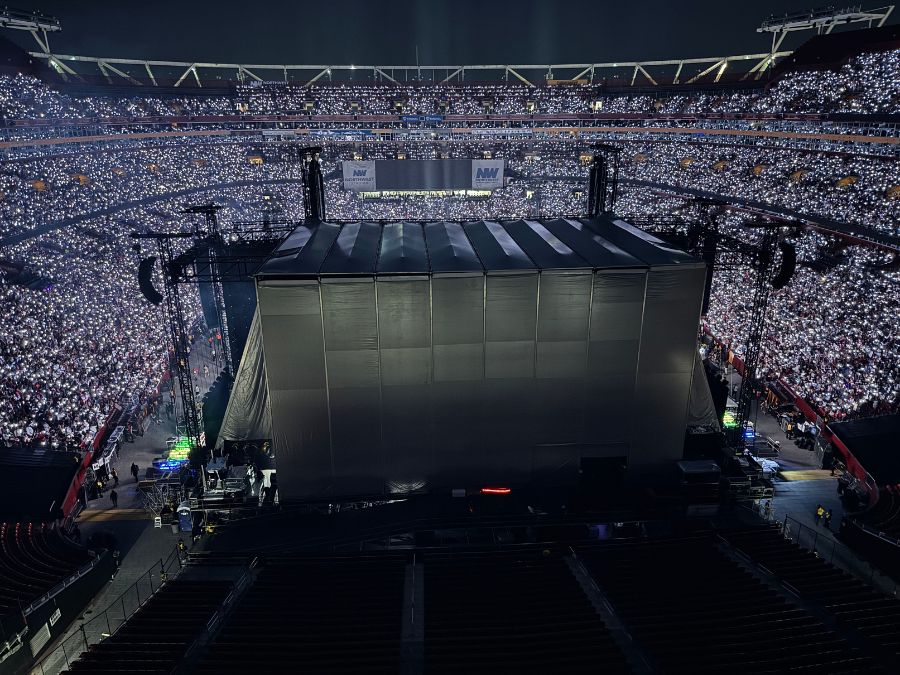
Step-by-Step Guide
What a Concert and Festival Production Company Handles
Staging. The platform and the structure around it. Indoors this can be a simple riser. Outdoors it usually means a stage with a ground-supported roof rated to carry lighting, audio, and video, and to stand up to wind and weather.
Audio. The system that gets clean sound to the whole audience, from a few hundred people to a field of thousands. This includes the main speakers, monitors for performers on stage, the mixing positions, and the engineers who run them.
Lighting. Stage lighting for visibility and for the look of the show, plus the console and operator. Outdoor and evening events also plan for how lighting changes as the sun goes down.
Video. Screens or LED walls so the audience can see the stage, image magnification of performers, and content playback where the program calls for it.
Power and distribution. The system that feeds everything. Outdoor sites usually run on generators with distribution sized to the combined load, since wall power is rarely available or sufficient.
Rigging. The hardware and the trained riggers that put audio, lighting, and video safely in the air on the structure, rated to the loads involved.
Crew and project management. The people who plan the build, install it on schedule, run it during the show, and strike it after, with one contact coordinating the whole thing.
What Changes for Outdoor and Festival Events
An indoor concert can often use a venue's rigging points, house power, and existing stage. An outdoor festival starts from bare ground. That shifts work toward ground-supported structures instead of hanging from a ceiling, generators and distribution instead of house power, and weather planning for wind, rain, and heat.
Multi-stage festivals add another layer: each stage is its own build, and the site needs a power plan, a schedule, and coordination so stages do not collide on resources or timing.
Where a Production Company Fits Among Other Vendors
A production company is not the same as an equipment rental house, which supplies gear without design or crew, or a single-discipline vendor that covers only audio or only lighting. The production company designs the technical plan, provides or sources the gear across all disciplines, brings the crew, and takes responsibility for how it all works together.
For staging structure and truss, it may bring in ground support and truss supply through a partner such as Conder Truss, and for additional skilled hands it can scale crew through a staffing partner such as Charm City Crewing.
How an Engagement Usually Works
1. Site assessment. Walk the venue or site to confirm access, power, ground conditions, and rigging or structural needs.
2. Production plan. Translate the program into a staging, audio, lighting, video, power, and rigging plan with a budget.
3. Scheduling. Build the load-in, rehearsal, show, and strike timeline, and the crew to match.
4. Build and show. Install, test, run the event, and strike, with one contact owning the day.
Examples
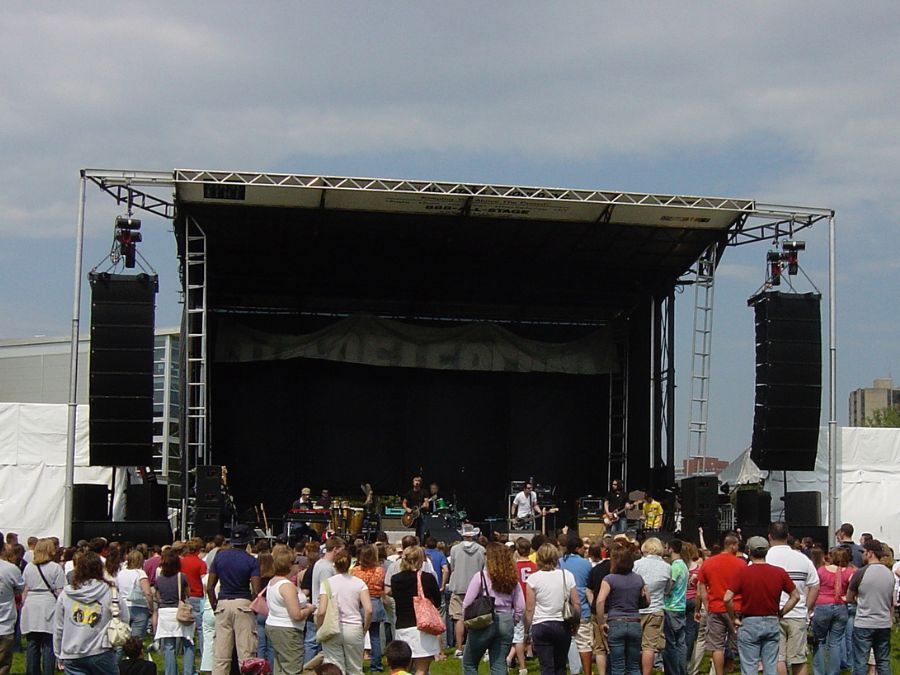
A modest sized single-stage outdoor concert. Typical build: a ground-supported stage and roof rated for the rig, a line-array audio system with stage monitors, a lighting rig on the roof with a console and operator, image-magnification screens, a generator with power distribution, and a rigging and stagehand crew for load-in and strike.
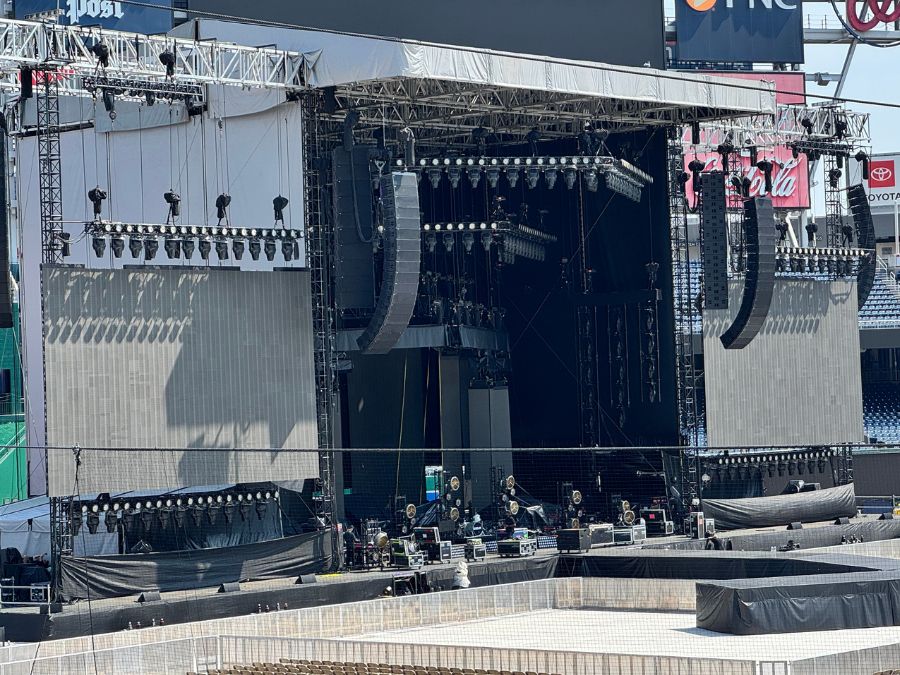
A stadium-scale concert with a full production build. Typical build: a ground-supported stage and roof structure, a line-array audio system hung on both sides of the stage, an extensive moving-light rig, video and image-magnification screens integrated with the venue's existing scoreboard, and a rigging and stagehand crew sized to a stadium-level show.
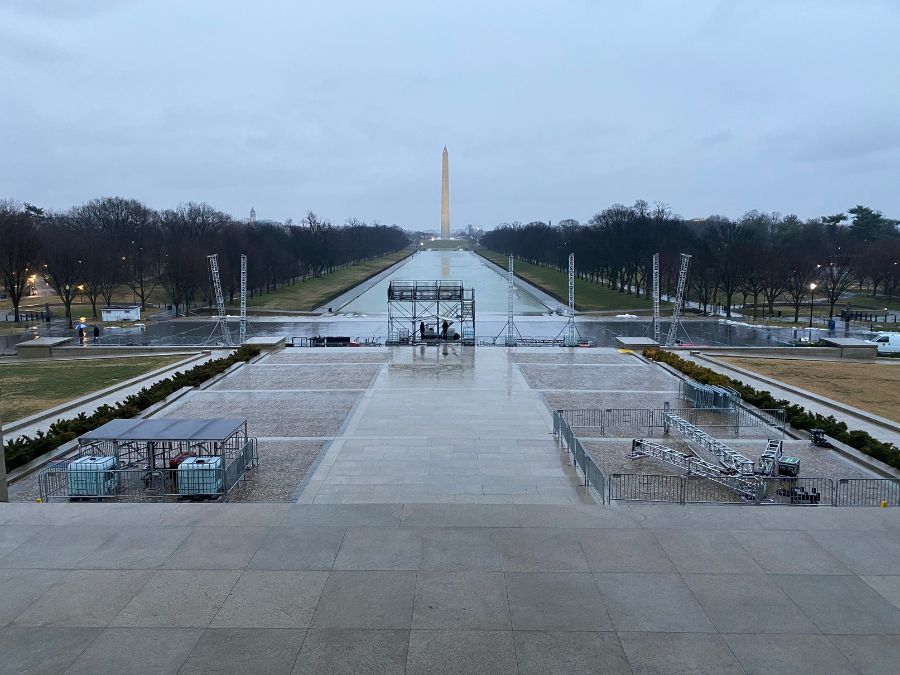
A production build on a non-traditional outdoor site. Typical build: ground support towers staged in overcast, wet conditions, barricades and site fencing laid out ahead of the crowd, ballast and equipment cases positioned for the build, and a crew working an early load-in before the site opens to the public.
Next Step
1. Share your event date, site or venue, expected attendance, and what the program looks like -- number of stages, performers, and any content playback.
2. We assess the site and confirm what infrastructure exists versus what needs to come in.
3. You receive a production plan and quote covering staging, audio, lighting, video, power, rigging, and crew as one package.
4. We build the load-in, rehearsal, and strike schedule so every piece is in place before the show starts.
Frequently Asked Questions
What is the difference between a production company and an equipment rental house?
A rental house supplies gear. A production company designs the technical plan, provides the gear across audio, lighting, video, staging, and power, brings the crew, and is responsible for how everything works together on the day.
Do I need a production company for a small outdoor concert?
If the site has no stage, power, or rigging, yes, because someone has to bring and run that infrastructure safely. For a very small acoustic set at a venue with house systems, a single audio vendor may be enough.
Who handles power at an outdoor festival with no electricity on site?
The production company, usually with generators sized to the total load and distribution run to each stage and area. Power is planned early because it affects everything else.
What is ground support, and why do outdoor stages use it?
Ground support is a free-standing structure that holds lighting, audio, and video in the air when there is no ceiling to rig from. Outdoor stages use it because a field has no overhead rigging points, and it must be rated for the load and the weather.
Does a production company provide the crew too?
Yes. Trained crew to install, operate, and strike the event is part of the service, and crew can be scaled up for larger or multi-stage events.
How early should I bring in a production company for a festival?
As soon as the site and date are set. Site assessment, structural and power review, and the production plan all happen before gear is booked, and busy seasons fill up.
Can one company handle a multi-stage festival?
Yes. A production company can run multiple stages as one coordinated build, with a site-wide power plan, a schedule, and a single lead, which avoids the gaps that appear when each stage has a different vendor.
Need Help?
Conder Inc is a full-service event production company serving Baltimore, the East Coast and beyond.
Main stages. Multi-day builds. Stadium-scale rigs. One call. One team. Everything covered.
Tell us your date, your venue, and what the event needs to accomplish, and we will build the production plan around it.