
How Many Crew Do You Need for an Event?
Author: Conder Inc Production Team | Last Updated: August 2026
Crew size for an event is set by the build, not the guest count. The drivers are how much structure and rigging goes up, how many systems have to be installed and operated, how long the load-in window is, and whether the site has usable power and dock access. A small corporate event in a venue with house AV may need only a few technicians. A multi-stage outdoor festival needs riggers, stagehands, and system techs across several days plus strike. A 200-guest gala and a 200-guest concert can require completely different crews, because the build is different even though the room size is not.
---
Quick Decision Guide
| If your event involves... | Your crew list generally needs... |
|---|---|
| A meeting or banquet using the venue's house AV | A small technical crew to operate and support, minimal install labor |
| A staged event with lighting, audio, and video brought in | Stagehands for install, plus audio, video, and lighting techs for the program |
| Rigging, truss, or anything hung overhead | Certified riggers, in addition to general stagehands |
| An outdoor build with ground support and generators | A larger install crew, power techs, and a longer load-in and strike window |
| A multi-day or multi-stage event | Crew scheduled in shifts across the full run, not a single call |
Key Takeaways
- Crew size follows the build, not the headcount. Guest numbers matter far less than how much structure and how many systems go in.
- Load-in and strike are separate line items. Both need labor, and both belong in the quote before you compare prices.
- Rigging is a certified role. Anything hung overhead needs qualified riggers, and that is not a place to reduce the crew count.
- Compressed schedules increase crew. A shorter load-in window means more people working in parallel, not fewer hours billed.
- Bundled crew removes a coordination step. When crew comes with the production, scheduling and accountability sit with one team.
Step-by-Step Guide
What Actually Determines Crew Size
Scope of the build. Every stage deck, truss section, motor, speaker array, and video wall represents labor to install, focus, operate, and remove. The equipment list is effectively the crew list.
Load-in window. The same build installed in one day instead of three needs more people working at once. Venues with restricted access hours drive this hard.
Site conditions. Dock access, distance from truck to stage, stairs, elevators, and terrain all change how long the same work takes. Outdoor sites without existing power or level ground add hours before anything goes up.
Roles required. General stagehands cover a lot of a build, but riggers, audio, lighting, and video techs are distinct roles. Certification requirements apply to overhead work.
Show duration and complexity. A one-hour program with a static look needs fewer operators than a multi-act show with cues, changeovers, and content playback.
The Roles on a Typical Production
- Stagehands: general install and strike labor, decking, cable, cases, and set pieces
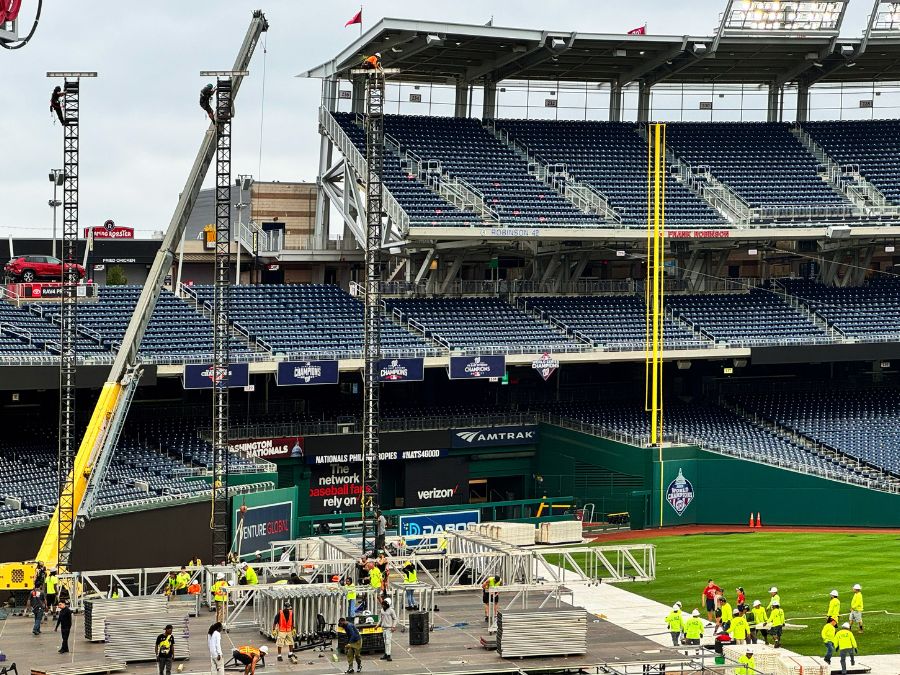
- Riggers: overhead work, motors, truss, and rigging points, certification required
- Climbers: Helps get the stage built and struck, by building the roof and having it raised. Also by building structures at front of house or in the field. Which holds additional lighting, audio and sometimes video.
- Audio techs: system install, tuning, mix, and monitors
- Lighting techs: hang, focus, patch, and board operation
- Video techs: LED and projection install, content playback, and switching
- Production manager: schedule, run-of-show, and the single point of contact on site
Not every event needs every role. Most events need more of them than a first-pass budget assumes.
When Crew Should Come With Your Production
There are two ways to get crew, and the right one depends on what else you are buying.
Bundled with production. If you are already hiring a production company for staging, AV, rigging, and logistics, the crew should come with it. The company that specified the gear knows how many people it takes to install, how to sequence the build, and who needs to be on site when. Scheduling, supervision, and accountability sit in one place, and there is no gap between the vendor who delivered the equipment and the labor expected to put it up.
This is how Conder Inc works. Crew is part of the production, not a separate call you have to make.
Booked standalone. If you are producing the event yourself, or you already have your gear and your plan and simply need reliable labor, standalone crew staffing is the better fit. That is what Charm City Crewing does: vetted, certified crew booked directly for production companies, venues, touring acts, and AV firms that run their own builds.
Both routes exist inside the same group. Which one you want depends on whether you need a production partner or a crew partner.
Common Ways Crew Budgets Go Wrong
Counting install but not strike. Strike labor is real and often happens on overtime hours late at night.
Assuming the venue provides labor. Some venues require house crew, some allow outside crew, and some require both. Confirm early, because it affects cost and scheduling.
Under-scoping rigging. Overhead work has certification and safety requirements that do not flex with budget.
Ignoring shift length and breaks. Long builds trigger break requirements and overtime. A crew call is not a flat number of bodies, it is bodies across a schedule.
Treating the crew call as a headcount instead of a schedule. The useful question is not how many people, it is how many people across which hours in what sequence.
Examples
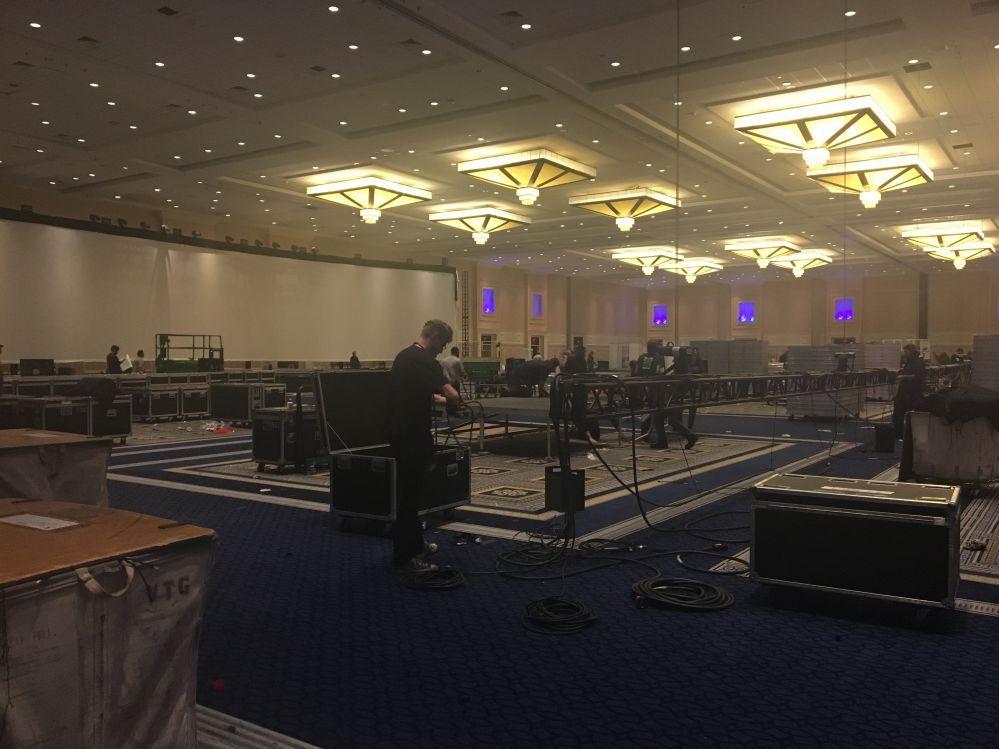
A 300-person corporate awards dinner in a hotel ballroom using house AV. Typical crew: a small technical team to supplement the house system, install any brought-in lighting or video, and operate audio and video during the program. Load-in often fits in a single day, sometimes the morning of, and strike is short.
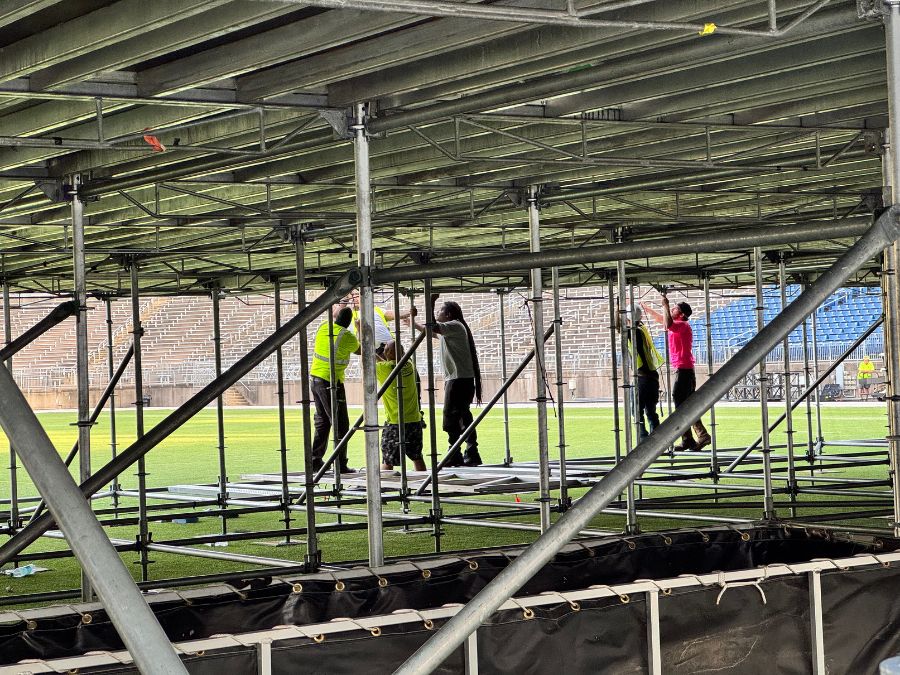
A single-stage outdoor concert with a brought-in rig. Typical crew: stagehands for the ground support and stage build first, certified riggers for anything going overhead, then audio, lighting, and video crews for install, followed by operators for the show itself. Load-in typically spans more than one day, and strike usually runs the same night the show ends.
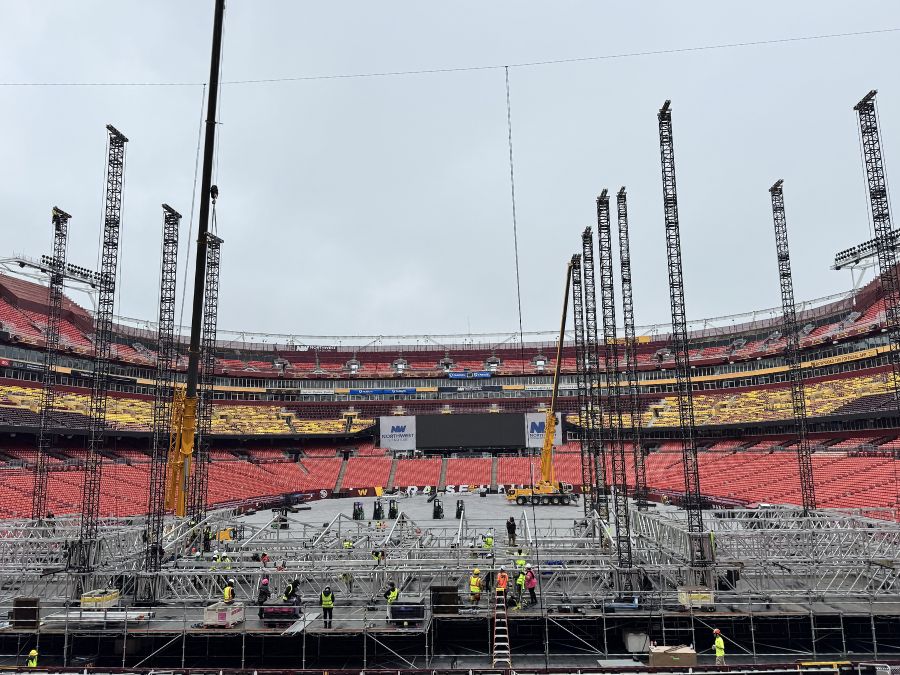
A two-stage festival across a weekend. Typical crew: two builds staffed in parallel or in sequence, crews working in shifts across multiple days, riggers on each stage, operators per stage during programming, and strike handled as its own scheduled operation. Here the planning question shifts from how many people to how many people at which hours on which stage.
Next Step
1. Share your event date, venue or site, and the equipment list or production scope as it stands.
2. We review the build against your load-in window and confirm which roles are required, including any certified rigging work.
3. You receive a crew plan covering install, show, and strike, with the schedule each call is built around.
4. We confirm venue labor rules and lock the crew before peak-season availability tightens.
GET CREW SUPPORT
Conder Inc supplies trained production crew for every role, as part of a full production or as a scoped labor package.
Frequently Asked Questions
How many stagehands do I need for a concert?
It depends on stage size, how much is rigged overhead, and the load-in window. A single-stage show with a modest rig and a full day to install needs a different crew than the same show installed in four hours. The equipment list and the schedule together determine the number.
How much does event crew cost?
Crew is generally billed hourly by role, with minimum call lengths and overtime rules that vary by market and by venue. Rigging and specialized technical roles carry different rates than general stagehands. Because the total depends on the build, the schedule, and the venue's own rules, a crew quote follows the equipment list and run-of-show rather than preceding them.
What is the difference between a stagehand and a rigger?
Stagehands handle general install and strike work at ground level. Riggers work overhead, installing points, motors, and truss. Rigging requires certification and is not interchangeable with general labor.
Do I need certified riggers?
For anything suspended overhead, yes. Venues and insurers commonly require it, and it is a safety requirement rather than a preference.
Should I book crew separately from my production company?
If you are already hiring a production company for the build, bundled crew is simpler and removes a coordination gap. If you are running your own production and only need labor, standalone crew staffing is the better fit.
How far in advance should I book event crew?
Availability is tightest during peak season, and crew books out before gear does in most markets. Book as soon as the date and rough scope are known, and treat crew as one of the first calls rather than a detail handled once the gear is locked.
Can I use the venue's in-house crew instead?
Sometimes, and sometimes you are required to. Venue rules vary on whether outside labor is permitted, so confirm before building your budget.
Do you provide crew for events you are not producing?
Yes, through Charm City Crewing, which books crew directly for production companies, venues, and touring productions running their own builds.
Need Help?
Conder Inc is a full-service event production company serving Baltimore, the East Coast and beyond.
Galas, brand activations, fundraisers, product launches, and custom builds. One call. One team. Everything covered.
Tell us your date, your venue, and what the event needs to accomplish, and we will build the production plan around it.